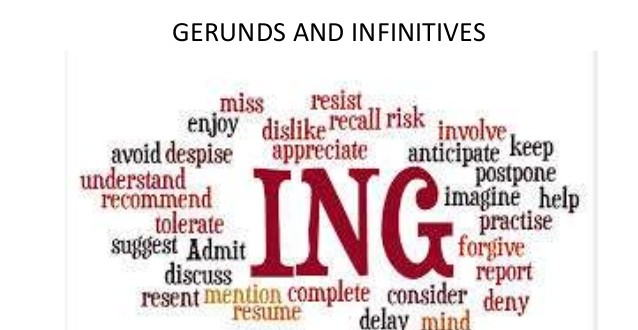
A gerund - vagy inges alak nagyon szépen angolossá teszi a beszédünket, és lerövidít sok bonyolult
szerkezetet, például that/should-os - (hogy valaki csináljon valamit) mellékmondatot.
(Például: I suggested (to him) that he should do some sports. - helyett: I suggested him doing some sports.)
Már egész korán meg kellett tanulnunk, hogy a szeret-nem szeret jelentésű igék után az igei tárgy (amit szeret-nem szeret az ember csinálni), -inges alakban, tehát gerund formában áll.
Vannak olyan igék, főnevek, szerkezetek, amik után lehet gerundot is és főnévi igenevet is használni.
Van amikor csak gerundot, és van amikor más a jelentése a kettőnek. Meg kell tanulni. Lehetőleg kis mondatokkal, eleve a szó tanulásakor már úgy kiírva a szótárba.
ADMIT (beismer)
~ (to)
doing sth: He admits
(to) having neglected his children.
~ (to)
sth: He admits (to) his
mistakes.
~ (to sb)
(that): He admitted (to his
parents) (that) he had failed his exam.
APPRECIATE (méltányol, értékel)
~ sth: I really appreciate your kindness.
~ doing
sth: I appreciate being
treated like a princess.
~ sb
doing sth: We would
appreciate you helping us. (hálásak lennénk)
~ that: I appreciated that he took me home.
AVOID (elkerül)
~
sb/sth: The crash
couldn't be avoided. (elkerülhetetlen volt)
~
sb/sth doing sth: They
built a dam to avoid the water flooding the city.

~ doing
sth: He tried to avoid
meeting them.
HELP (CAN'T HELP) (nem tud megállni vmit)
can't/
couldn't ~ doing sth: I
couldn't help laughing when I heard that incredible story. (nem
tudtam megállni nevetés nélkül)
can't/
couldn't ~ but do sth:
I couldn't help but laugh when I heard that story. (csak
nevetni tudtam)
STAND (CAN'T STAND) (ki nem állhatja)
~
sth/doing/to do sth: I
can't stand (watching/to watch) bad films.
~ sb
doing sth: I can't
stand people laughing at me.
~ it wh: She can't stand it when people criticize
her.
CONSIDER (megfontol)
(megfontol)
~ sth: I've heard that you are considering a new
career.
~ doing
CONSIDER sth: We
consider moving.
~ wh: We have to consider where to go on
holiday
DELAY (elhalaszt)
~ sth: They agreed to delay the offensive.
~ doing
sth: They delayed
introducing new measures.
DENY (tagad, megtagad)
~ sth: He denied the accusation. (visszautasította a vádakat)
~ sth
(to sb): He denies
nothing (to her).
~ (sb)
(sth): He denies (her)
(nothing).
~ doing
sth: He denied stealing
the car.
~
(that): He denied
(that) he had stolen the car.
~
oneself (sth): Don't
deny yourself (anything)!
DISLIKE (nem szeret)
~
sb/sth: I don't dislike
him at all.
~ it wh: She dislikes it when people are
aggressive.
~ doing
sth: I dislike hurting
my father.
~ sb's
doing sth: He disliked
her leaving home.
FANCY (tetszik, kedvére van)
~ sth: Do you fancy a beer? (Nem
kérsz egy sört?)
~ sb: I am sure he fancies you. (tetszel neki)
~
oneself (as) sth: He
fancies himself (as) a famous politician. (úgy tekint magára)
~ doing
sth: Do you fancy
having a drink tonight? (volna kedved)
~
(that): He fancied
(that) he could fly. (azt képzelte)
IMAGINE (képzel, elképzel)
~ sth
adj: Little children
imagine animals free and happy.
~ doing
sth: She can't imagine
living in a big city.
~ sb
doing sth: I can't
imagine him shouting.
~ that: She imagined that she was rich.
INVOLVE (maga után von)
~ sth: The technique involves the use of tiles.
~
(sb/sb's) doing sth:
The actor's contract with the company involves (him/his) using their product. (a szerződés része az, hogy)
~ sb in
(doing) sth: The
chairman should involve the board in (making) decisions. (be
kellene vonnia az igazgatótanácsot a döntéshozatalba)
JUSTIFY (igazol)
~ sth: His result justified the faith his
trainers had put in him.
~ sth
to sb: He had to
justify his decision (to the committee). (meg kellett indokolnia)
~
(sb/sth) doing sth:
These circumstances justify (us) spending more money. (indokolják)
MIND (bán, zavar)
~: He got up late, but he didn't mind. (de nem bánta)
~ sth: I don't mind the noise at all. (nem zavar a zaj)
~ doing: Do you mind working in the garden? (bánod, ha a kertben kell dolgoznod)
~
sb/sb's doing sth: I
hope you don't mind me/my opening the window. (remélem, nem
zavarja)
POSTPONE (elhalaszt)
~ sth
(to/until sth): They
postponed the outing (until Monday).
~ doing
sth: They postponed
building the new underground line.
RESIST (ellenáll)
~ (sth): The police resisted the demands of the
kidnapper.
~ doing
sth: She resisted
telling him about the surprise.
RISK (kockáztat)
~ sth: He risked his life for his turtle.
~ sth
on sth: He risked
everything on roulette.
~ doing
sth: How could he risk
losing all his money?
~ sb
doing sth: He couldn't
risk his partner telling everything to the police so he killed him.
SUGGEST (javasol)
~ sth
(to sb): He suggested a
solution (to me).
~
sb/sth (for sth): Who
would you suggest for this role? (kit ajánlanál)
~
sb/sth (as sth): Who
would you suggest as Desdemona ? (kit ajánlanál)
~ doing
sth: I suggested seeing
a film.
~ sb's
doing sth: I suggested
his taking up some sport.
~ (to
sb) (that): I suggest
(to him) (that) he takes up some sport.
~ (to
sb) (that) sb (should/might) do sth: I suggested (to him) (that) he (should) take up some
sport.
it is
~ed that sb/sth (should) do sth: It has been suggested that everybody (should) vote.
~ (to
sb) wh: He suggested
(to me) where to look for a job.
~ sth
(to sb): The evidence
suggested murder (to the detective). (sugallt)
~
(that): The evidence
suggests that Mr. Smith has been murdered. (a bizonyíték
arra utal)
TOLERATE (elvisel)
~ sth: I can't tolerate his behaviour.
~ doing
sth: She won't tolerate
being refused.
~ sb
doing sth: I won't
tolerate you being late.
MISS (hiányzik)
~ (sth): He tried to score a goal, but he missed
(it). (mellé lőtt)
~ doing
sth: I miss running in the morning
INSIST (ragaszkodik)
~ on
(doing) sth: He
insisted on (taking) the bigger cake.
~ on
sb/sb's doing sth: I
insist on you/your taking the bigger cake.
~ that
sb (should) do sth: He
insisted that he (should) concentrate on improving his speaking skill.
OBJECT (ellenez)
~ to
sb/sth: The president
objected to the new financial policy.
~ to
(sb/sb's) doing sth: I
objected to (him/his) leaving the camp. (elleneztem, hogy
elhagyja)
~ that: He objected that he was dismissed without
any
és még számtalan létezik, ez nem a teljes lista